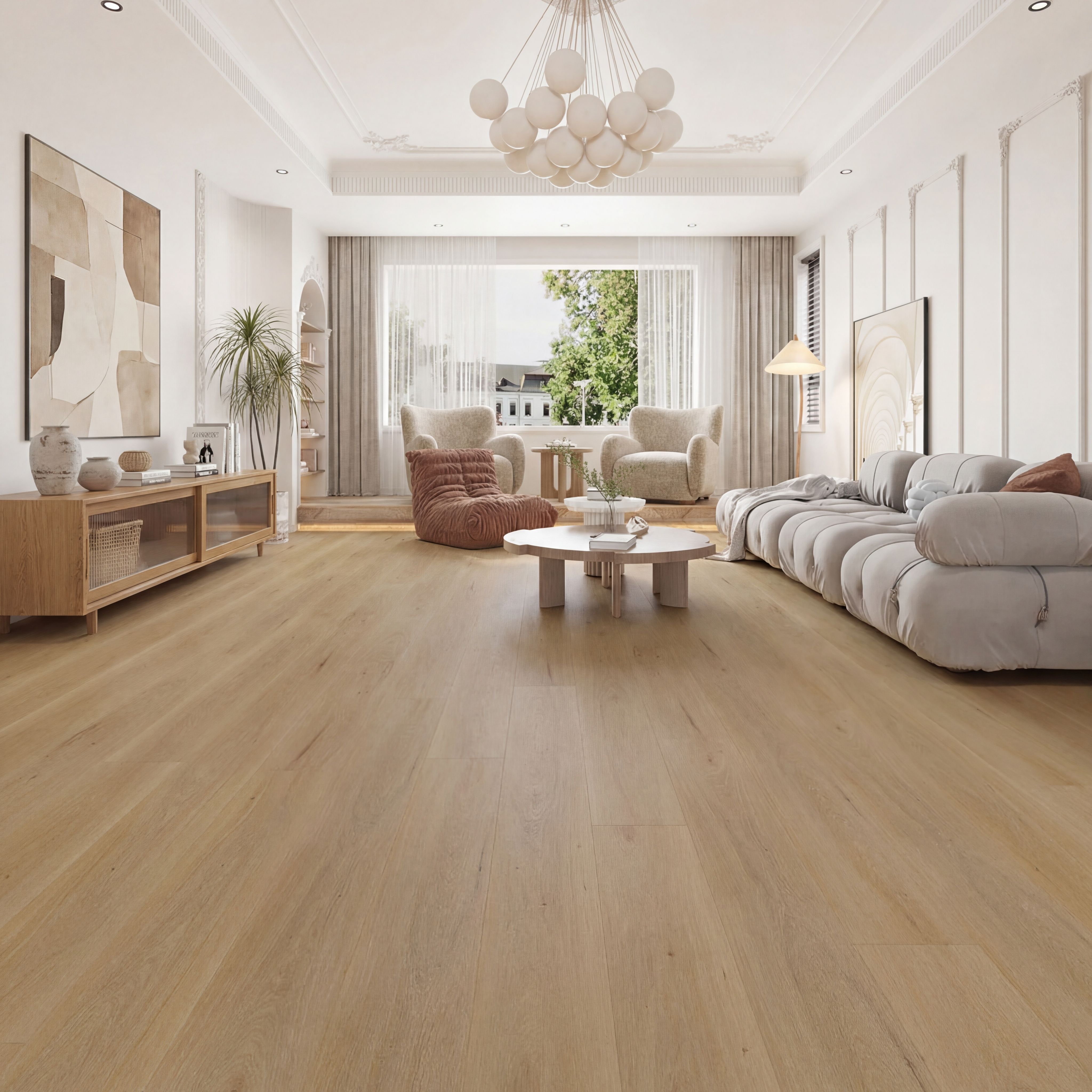
Engineered Hardwood
Engineered hardwood flooring gives you a real wood surface layer over a layered core of plywood, HDF or SPC. Compare species, wear-layer thickness, core type and installation method on each product, then add the underlayment and stair noses for your project. Delivery across Canada.
Engineered hardwood is made of stacked layers glued together and cut into planks. The top wear (veneer) layer is real wood, available in many species and shades. Under it is the core: plywood is the most common and offers excellent stability, HDF is also one of the most stable options, and SPC (limestone and plastic) is durable and water-resistant. Look for at least three layers, ideally five or more.
How long an engineered floor lasts depends on the thickness of the wear layer and the quality of the plank. A thicker veneer can be sanded and refinished once or twice to remove scratches. A thinner veneer can take a fresh coat of finish but can't be sanded. Check the wear-layer thickness and warranty on each product page.
Installation methods vary by product, so follow each product's specifications and installation guide. For floating installs, underlayment adds a barrier against moisture from the subfloor, extra comfort and a smooth, even surface: shop laminate and hardwood underlayments. For glue-down installations, compare wood flooring adhesives by subfloor, flooring compatibility, working time and manufacturer instructions. Finish stairs with a matching hardwood stair nose.
Browse Fuzion engineered hardwood and Vidar engineered hardwood, or see everything from Fuzion and Vidar.
Frequently asked questions
See all FAQsHow is engineered hardwood flooring built, and how is it different from solid hardwood?
Engineered hardwood is made of stacked layers glued together: a real wood wear (veneer) layer on top of a core of plywood, HDF or SPC. Solid hardwood is real wood all the way through. One key difference is refinishing: engineered hardwood can be sanded and refinished only once or twice, depending on the thickness of the veneer.
Can I install engineered hardwood in a basement or over concrete?
It depends on the product, so check each product's specifications and installation guide. For example, the Vidar installation instructions say its hardwood flooring may be installed below, on or above grade. Basements must be dry and well ventilated, and concrete subfloors must be dry, clean and tested for moisture (75% relative humidity or less with ASTM F2170 or equivalent). The same guide says not to install in full bathrooms.
Do I need an underlayment under engineered hardwood?
FloorBox recommends underlayment for engineered hardwood. It acts as a barrier against moisture from the subfloor, adds comfort and helps give a smooth, even surface that feels warmer in winter. Requirements depend on the installation method, so follow each product's installation guide. For example, Vidar's guide calls for underlayment in floating installs and a vapour retarder over an unfinished crawlspace or basement for nail-down installs.
How do I choose the wear-layer thickness for engineered hardwood?
The wear layer decides how long the floor lasts and whether it can be refinished. A thicker veneer can be sanded and refinished once or twice, while a thinner one can only take a fresh coat of finish. Wear-layer thickness is listed in the specifications on each product page; for example, Vidar Naked Oak Select & Better has a 3 mm wear layer. Also check the product warranty.
Can’t find your answer?
Browse the general FAQ, chat with a flooring specialist or send us a message.